Author: Lloyd C

How to Quickly Secure a Passport for Your Newborn Baby – A Step-by-Step Guide

Traveling abroad with a newborn baby already has its share of stress, so make sure you take care of getting a passport for your little one well before your scheduled trip.

First of all, you should be aware that passports for minors are a bit more complex than applying for an adult passport because the State Department requires proper documentation with evidence proving the parents are indeed the child’s parents or guardians.

A number of local post offices and retail postal stores have passport acceptance agents who can witness the signature of the passport form; some acceptance agents require no appointment. However, an appointment is necessary at all official passport agencies.

How to Apply for a Newborn Passport?

To complete the process, you will need:

  • The child’s birth certificate
  • A DS-11 passport application
  • A photo of the newborn
  • The parents’ IDs
  • If applicable, court documents proving the parent and child relationship
  • The required fee

Complete the Process Using These Four Steps:

Step 1 – Passport Application Form

You will need to obtain a copy of the application form DS-11 for a new passport. You will need to fill out the application form but do not sign the DS-11 application until asked to do so by an acceptance agent. 

Step 2 – Proof of Citizenship

Proof of citizenship. Provide a copy of the newborn’s birth certificate, including both parents’ names for the baby’s proof of citizenship. If the applicant is a natural parent, this will also prove this relationship.

However, if the child is adopted or the applicant is the legal guardian, a copy of adoption papers or court documents should be brought along as well to demonstrate your legal right to have the child. A copy of the front and back of each parent’s ID (driver’s license or passport) is necessary.

Step 3 – The Baby Passport Photo

Bring along a 2″ x 2″ printed color picture of the baby. The photo should have a white background, so either lay the baby on a white sheet and photograph from above or put them in their car seat with a white sheet behind them.

Only the child may be in the photo (no adults holding them); the photo should be a close-up of their face — no shadows, eyes open, and looking into the camera.

Step 4 – Submitting the Application

Go to the passport agency of your choice with the photo and documents. Both legal parents should be present; if one cannot be there, they must provide a notarized statement of the consent form (Form DS-3053).

The actual ID from each parent should be brought along as well as the copies that were created in Step #2.

Sign and pay. Sign the DS-11 form only when directed by the acceptance agent. Pay all applicable fees, including the expedited service fee if faster service is used.

If, for some reason, you cannot get your passport expedited with the passport agency U.S. Passport Help Guide recommends National Passport Service get your passport expedited for your newborn in as little as 24 hours.

Conclusion

Getting a passport for a newborn may seem daunting, but it doesn’t have to be. By following the steps outlined in this blog post and being thorough with paperwork and communication with government officials, you can guarantee that you have everything you need to obtain a passport for your little one.

How Early Can I Renew My Passport Before it Expires? Timing Your Application for Hassle-Free Travel

Renewing your passport is a crucial task for any international traveler. Many countries require passports to be valid for at least six months beyond the planned return date. This rule can catch people off guard and ruin travel plans.

The best time to renew your passport is 9 to 12 months before it expires. This gives you plenty of time to deal with any issues that may come up during the renewal process. It also ensures your passport will be valid for upcoming trips.

Renewing early has other benefits too. You can avoid rush fees and get your new passport without stress. It’s a smart move for anyone who wants to be ready for unexpected travel opportunities.

Key Takeaways

  • Renew passports 9-12 months before expiration for peace of mind
  • Early renewal avoids rush fees and last-minute stress
  • Check passport validity requirements for all planned destinations

Understanding Passport Validity Requirements

Applying for Passport
Applying for New Rushed Passport

Passport validity rules vary by country and can impact your ability to travel. Knowing these requirements helps ensure smooth entry at your destination.

Country-Specific Entry Rules

Many countries require passports to be valid for a certain period beyond the planned stay. Some need 3 months of validity, while others demand 6 months. The United States often asks for 6 months.

A few nations only require passports to be valid for the duration of the visit. It’s crucial to check the specific rules for each country you plan to visit.

These rules can change, so it’s best to verify them close to your travel date. You can find this info on official government travel websites or by contacting embassies directly.

Passport Expiration Buffer Period

A buffer period is extra time added to your passport’s validity to meet entry rules. This helps avoid issues if your trip gets extended unexpectedly.

Most experts suggest renewing your passport 9 months before it expires. This gives you enough time to handle any delays in the renewal process.

Renewing early also ensures you have a valid passport for sudden travel needs. It’s better to have a new passport ready than to rush the process later.

Some countries have different rules for passport validity on arrival versus departure. It’s safest to have a passport valid for your entire trip plus the required buffer.

Ideal Renewal Time Frames

The best time to renew your passport depends on your travel plans and how quickly you need it. Knowing the timelines for routine and expedited renewals can help you plan ahead.

Routine Renewal Process

The standard passport renewal process takes about 6-8 weeks. It’s wise to start this process at least 9 months before your passport expires. This gives you plenty of time in case of delays.

Many countries require passports to be valid for 6 months after your planned return date. Renewing early ensures you meet this rule. It also avoids last-minute stress if you need to travel unexpectedly.

You can submit your renewal application by mail. Include your old passport, a new photo, and the required fees. The State Department will return your old passport after processing.

Expedited Renewal Services

If you need your passport faster, expedited services are available. This process takes about 2-3 weeks. You’ll pay an extra fee for this quicker service.

For urgent travel within 2 weeks, you can make an appointment at a passport agency. Bring proof of your upcoming trip. They can often process renewals in 24-72 hours.

Some private companies offer even faster turnaround times. These services charge higher fees but can be helpful in emergencies. Always check that the company is reputable before using their services.

Steps to Renewing Your Passport

Renewing your passport involves gathering documents, submitting an application, and paying fees. The process can be done by mail or in person at acceptance facilities.

Documentation Required

To renew your passport, you’ll need specific items:

  • Your most recent passport
  • passport photo taken within the last 6 months
  • Form DS-82 (if eligible for renewal by mail)
  • Proof of name change (if applicable)

Make sure your old passport is undamaged and was issued in the last 15 years. The photo must be 2×2 inches, in color, with a white background. Fill out Form DS-82 carefully, following all instructions.

Application Submission Options

DS-82 Application Form
DS-82 Application Form for Passport Renewal

You can renew your passport by mail or in person:

By mail:

  • Send all required documents to the address on Form DS-82
  • Use a secure shipping method with tracking

In person:

  • Visit a passport acceptance facility (post offices, libraries, or courthouses)
  • Schedule an appointment if needed
  • Bring all required documents and forms

Choose in-person renewal if you’re not eligible for mail renewal or need your passport quickly.

Fees and Payment Methods

Passport renewal fees vary based on the type of passport:

  • Book only: $130
  • Card only: $30
  • Book and card: $160

For expedited service, add $60 to the total fee. Payment methods include:

  • Personal checks
  • Money orders
  • Credit/debit cards (at some locations)

Make checks or money orders payable to “U.S. Department of State.” Include your full name and date of birth on the memo line. Processing times range from 4-6 weeks for routine service to 2-3 weeks for expedited service.

Frequently Asked Questions

Passport renewal involves specific timelines, processes, and requirements. These key details help travelers plan ahead and avoid issues with international travel.

What are the processing times for passport renewal applications?

Standard processing takes 6-8 weeks. Expedited service cuts this down to 2-3 weeks for an extra fee. Processing times may vary based on application volume and other factors.

Is it possible to renew a passport online, and if so, how?

Online renewal is available for eligible applicants. The process involves filling out an online form, uploading a digital photo, and paying fees electronically. Not all passport holders qualify for online renewal.

What are the requirements for renewing a passport in person?

In-person renewal requires Form DS-82, a recent photo, current passport, and fees. Applicants must visit a passport acceptance facility. Some situations may need extra documents.

When does a passport need to be renewed to comply with the six-month validity rule for international travel?

Many countries require passports to be valid for at least six months beyond the planned return date. Travelers should renew 9-12 months before expiration to meet this rule.

Could you explain the expedited renewal process for passports?

Expedited renewal costs an extra fee but shortens processing to 2-3 weeks. Applicants can request this service by mail or in person. Proof of urgent travel may be needed.

How can one renew a passport that has already expired?

Expired passports can be renewed by mail if they’re less than 5 years past expiration. Older expired passports require in-person renewal with Form DS-11 and additional documentation.

How to Get a US Passport After Naturalization: A Quick Guide for New Citizens

Becoming a U.S. citizen through naturalization is a big step. It opens up new opportunities, including the chance to get a U.S. passport. A passport lets you travel freely and proves your American citizenship.

Getting a U.S. passport after naturalization is a straightforward process that can be done in person or by mail. You’ll need to fill out an application form and gather some documents. These include your Certificate of Naturalization and a valid photo ID.

The process usually takes 4-6 weeks for regular service. If you need your passport faster, you can pay extra for expedited service. With your new passport in hand, you’ll be ready to explore the world as a U.S. citizen.

Eligibility and Necessary Documents

Getting a US passport after naturalization requires meeting specific criteria and providing the right paperwork. It’s important to know if you qualify and what documents you’ll need before starting the process.

Determine Your Eligibility

To get a US passport, you must be a US citizen. If you’ve gone through naturalization, you’re eligible to apply right away. There’s no waiting period after becoming a citizen. You can apply for a passport as soon as you get your Certificate of Naturalization.

Age isn’t a barrier. Adults and children who’ve been naturalized can apply. If you’re under 16, a parent or guardian must apply for you.

Gather Required Documentation

You’ll need to prove your citizenship and identity when applying for a passport. Here’s what to gather:

  • Certificate of Naturalization (original)
  • Valid government-issued photo ID (driver’s license or state ID)
  • Passport photo
  • Completed DS-11 form

Keep your Certificate of Naturalization safe. The passport agency will return it after reviewing your application.

Understand the Passport Photo Requirements

Passport photos must meet strict rules:

  • 2×2 inches in size
  • Taken within the last 6 months
  • Plain white or off-white background
  • A neutral facial expression or a natural smile
  • Both eyes open
  • No glasses
  • No head coverings (except for religious reasons)

Many pharmacies and post offices offer passport photo services. They know the rules and can help you get a photo that meets all requirements.

Application Process and Next Steps

Naturalization

Getting a U.S. passport after naturalization involves several key steps. You’ll need to complete the right form, gather the required documents, and submit your application at an approved facility.

Complete the Application Form DS-11

To start your passport application, fill out Form DS-11. This form asks for personal information like your name, date of birth, and Social Security number. You can download it from the U.S. Department of State website or get a copy at a passport acceptance facility.

Don’t sign the form yet. You must sign it in front of a passport agent.

Make sure to fill out the form in black ink. Double-check all information for accuracy before submitting.

Find a Passport Acceptance Facility

Passport acceptance facilities include post offices, libraries, and courthouses. To find one near you:

  • Visit the State Department website
  • Use their passport acceptance facility search tool
  • Enter your zip code or city and state

Call ahead to check if an appointment is needed. Some places take walk-ins, while others require scheduling.

Bring your completed DS-11 form and all required documents to your appointment.

Review Fees and Payment Methods

Passport fees vary based on the type of passport and processing time:

TypeStandard ProcessingExpedited Processing
Book$130$190
Card$30$90
Both$160$220

There’s also a $35 execution fee for all new passports.

Acceptable payment methods include:

  • Personal checks
  • Money orders
  • Credit/debit cards (at some locations)

Cash is not accepted at most facilities.

Submit Your Application and Await Processing

At your appointment, a passport agent will:

  1. Review your documents
  2. Witness you sign the DS-11 form
  3. Take your passport photo (if needed)

After submission, processing times vary:

  • Routine service: 6-8 weeks
  • Expedited service: 2-3 weeks

You can check your application status online using the number provided on your receipt.

Once approved, your new passport will arrive by mail. Keep it in a safe place and remember the expiration date.

Frequently Asked Questions

Naturalized citizens often have questions about getting a U.S. passport and related processes. Here are some common inquiries and helpful information.

What documents are required when applying for a US passport for the first time as a naturalized citizen?

Naturalized citizens need to submit Form DS-11proof of citizenship, a valid ID, and a passport photo. The main proof of citizenship is the Certificate of Naturalization. Applicants must also bring a state-issued ID or driver’s license.

How can I expedite the process of getting a US passport after the oath ceremony?

To speed up the passport process, applicants can pay an extra fee for expedited service. This cuts the processing time to 2-3 weeks. For even faster service, they can make an appointment at a passport agency for urgent travel needs.

Is a certificate of naturalization sufficient to apply for a US passport?

Yes, the Certificate of Naturalization is enough to prove citizenship for a passport application. It’s the main document naturalized citizens use. Applicants should bring the original certificate to their passport appointment.

What steps should be taken to update my Social Security records after becoming a US citizen?

New citizens should visit a Social Security office with their Certificate of Naturalization and ID. They’ll need to fill out Form SS-5 to update their records. This ensures their Social Security information matches their new citizenship status.

How can I register to vote after naturalization?

New citizens can register to vote at their local election office, DMV, or by mail. Many states offer online registration too. They’ll need to provide proof of citizenship and residency. The process is often quick and simple.

After obtaining citizenship, do I need to update my driver’s license before applying for a US passport?

It’s not required to update a driver’s license before getting a passport. But it’s a good idea to update it soon after naturalization. This ensures all official documents show current information. Most states allow online or in-person updates.

The Ultimate Guide to Applying for a Chinese Visa—A Step-By-Step Guide for US Citizens

Do you want to experience the sights and sounds of modern-day China but are unsure of how to begin your Chinese visa application process?

We’ve got you covered!

This comprehensive guide from our experienced visa experts will provide step-by-step instructions on how to obtain a China visa required for US citizens traveling or living in mainland China.

Whether you’re planning an extended holiday, visiting relatives, conducting business, or anything else—this guide is full of helpful information outlining what documents are needed and how long the entire process takes. So get ready for a successful trip that starts with this ultimate Chinese Visa primer.

Related:

Chinese Visa Application Requirements [2023]

Tourist Visa (L)

  • Show a round-trip ticket booking record, proof of hotel reservation, or an invitation letter issued by a relevant entity or individual.
  • Personal details on the applicant (full name, date of birth, gender,  etc.)
  • You’ll need to provide details of your visit including dates of arrival and departure, places on your itinerary, relationship with the host, source of finances, and more.
  • So, to put it simply; you need to provide the name, contact number, address, official stamp, and the signature of the legal representative or the individual who is inviting.

Business Visa (M)

  • If you need documents from a trade partner in China for commercial activity or an invitation letter from an individual or entity for a trade fair, it should have the same information as the tourist visa.

Noncommercial Visa  (F)

  • If you want a Noncommercial visa, you’ll need an invitation letter from an approved entity or individual in China that includes the details mentioned above.

Student Visa (X)

  • You’ll need to bring an original and photocopy of the admission letter issued by a school or entity in PRC.

Related: Study Abroad China

Note: If you plan on staying for over 6 months with your X1 visa, you’ll need to provide an original photocopy of “Visa Application for Study in China” (Form JW201 or Form JW202).

Work / Employment Visa (Z)

In order to apply for a work or employment visa you will need to bring one of the following permits:

  1. The Chinese Ministry of Human Resources and Social Security issues Employment Permit for foreigners.
  2. Registration Certificate for a foreign company’s representative office in China, you’ll need to apply with the local industrial and commercial administration.
  3. The Chinese government authorities issue an approval document for cultural affairs commercial performances.
  4. The National Offshore Oil Corporation has issued an “Invitation Letter to Foreigners for Offshore Petroleum Operations”.

Family Reunion Visa (G)

  1. An invitation letter issued by a Chinese citizen or foreign citizen holding a Chinese permanent residence permit.
  2. To complete the registration process, a photocopy of either a Chinese ID or foreign passport, as well as a permanent residence permit, will be required.
  3. To apply for a Q1 visa, you will need to provide proof of kinship, such as a marriage certificate, birth certificate, certification of kinship from the Public Security Bureau, or a notarized certification of kinship. Please include both the original and a copy of the document.

Transit Visa (G)

A confirmed onward air, train, or ship ticket to the destination country or region is a mandatory requirement.

China Visa Fees

Visa fees for China vary greatly based on factors such as nationality, number of entries, country of application, and express service.

For citizens of the United States, the fee typically amounts to $185. Fees range from $30 to $90 for citizens of other countries.

While it is usually paid upon visa collection, some localities require the fee to be paid at the time of application.

Where to extend or renew your China visa?

Typically, once a China visa has been issued, renewing, extending, or switching to a different type is not possible. However, if you require a longer stay, a multiple-entry permit, or a visa of a different category, you may apply within China under specific circumstances.

Conclusion

Applying for a Chinese visa as a US citizen may seem like an intimidating process, but with the proper preparation and research, it can be much less daunting. This ultimate guide to applying for a Chinese Visa has laid out step-by-step exactly what you need to do in order to get a visa approved.

The Truth About Passport Expeditors in 2027: Are They Legit, Worth It, and Faster?

If you need a U.S. passport quickly in 2027, you may have seen companies offering “24-hour passports,” “same-day processing,” or “rush passport services.” Many travelers wonder whether passport expeditors are legitimate, how they work, and whether they can actually speed up the process.

The truth is this: passport expeditors are legal private courier companies that help submit applications to the U.S. Department of State faster through authorized channels. They cannot issue passports themselves, but they can help travelers navigate urgent passport processing, reduce paperwork mistakes, and secure faster turnaround times in qualifying situations.

What Is a Passport Expeditor?

A passport expeditor (also called a passport courier service) is a private company that submits passport applications on behalf of travelers. These companies work with regional passport agencies and help speed up the delivery and handling process.

Passport expeditors are commonly used for:

  • Last-minute international travel
  • Lost or stolen passports
  • Expedited passport renewals
  • Child passport applications
  • Name change passports
  • Urgent business travel
  • Visa and passport combinations

Many travelers use expeditors because standard passport processing can still take several weeks during busy travel seasons. Expedited government processing is faster, but travelers may still need help organizing documents, securing appointments, and avoiding delays caused by errors.

Are Passport Expeditors Legitimate?

Yes — legitimate passport expediting companies are legal businesses that assist with submitting applications to the U.S. Department of State.

However, travelers should understand an important distinction:

  • The U.S. government issues passports
  • Expeditors only assist with processing and submission
  • No private company can “guarantee” approval of a passport

A reputable passport expeditor should clearly explain:

  • Government fees
  • Their service fees
  • Estimated processing times
  • Required documents
  • Refund policies
  • Travel eligibility requirements

Be cautious of companies promising impossible turnaround times without explaining government requirements.

How Passport Expediting Works in 2027

The passport expediting process has become more digital and streamlined in 2027, but travelers still must meet federal requirements.

Typical process:

1. Complete the Correct Passport Form

Depending on your situation, you may need:

  • DS-11 for new passports
  • DS-82 for renewals
  • DS-64 for lost or stolen passports

2. Submit Supporting Documents

This usually includes:

  • Proof of citizenship
  • Government-issued ID
  • Passport photo
  • Travel itinerary (for urgent processing)

3. Choose Processing Speed

Travelers may select:

  • Routine service
  • Government expedited service
  • Urgent travel appointment
  • Private passport expeditor service

4. Expeditor Reviews and Submits Application

The expeditor checks documents for errors and submits the application through authorized channels.

Can Passport Expeditors Really Get Passports Faster?

In many cases, yes.

Private passport expeditors can often help travelers receive passports faster than standard mail processing because they:

  • Hand-deliver applications
  • Work directly with regional agencies
  • Help prevent application mistakes
  • Manage urgent processing logistics

However, the actual passport issuance still depends on the U.S. Department of State.

Fastest Ways to Get a Passport in 2027

Service TypeEstimated Processing Time
Routine Processing4–6 weeks
Government Expedited2–3 weeks
Regional Passport Agency1–7 business days
Emergency Passport ServiceAs fast as 24–72 hours

Processing times can change throughout the year depending on travel demand and staffing levels.

When Using a Passport Expeditor Makes Sense

A passport expeditor may be worth it if:

  • You have international travel within 14 days
  • You cannot get a passport agency appointment
  • You need help navigating documentation
  • You made a mistake on your application
  • You lost your passport before travel
  • You need multiple travel documents quickly

Business travelers, cruise passengers, students studying abroad, and families traveling internationally often use expedited passport services during emergencies or tight timelines.

Common Myths About Passport Expeditors

Myth #1: Expeditors Issue Passports

False. Only the U.S. Department of State can issue passports.

Myth #2: Expeditors Can Bypass Federal Rules

False. All applicants must meet the same citizenship and identity requirements.

Myth #3: Same-Day Passports Are Always Guaranteed

False. Same-day processing usually depends on urgent travel proof, agency availability, and documentation accuracy.

Myth #4: Expeditors Are Illegal

False. Legitimate passport courier companies legally assist with application handling and submission.

Warning Signs of a Scam Passport Service

Avoid companies that:

  • Promise guaranteed approval
  • Ask for unusual payment methods
  • Hide government fees
  • Lack a physical address
  • Do not explain documentation requirements
  • Claim they are “part of the government”

A trustworthy company should clearly state it is a private passport assistance service.

Passport Expeditor vs. Passport Agency

FeaturePassport ExpeditorRegional Passport Agency
Government OfficeNoYes
Helps With PaperworkYesLimited
Appointment NeededUsually NoYes
Issues PassportNoYes
Emergency ProcessingYesYes
Best ForConvenience & speedDirect government processing

Frequently Asked Questions

Are passport expeditors faster than the post office?

In many urgent situations, yes. Expeditors often help reduce delays caused by mailing and application errors.

Can I get a passport in 24 hours?

Possibly. Emergency and urgent travel cases may qualify for very fast processing depending on documentation and appointment availability.

Do passport expeditors work for the government?

No. They are private companies that assist travelers with processing.

Are passport expeditors worth the cost?

For travelers facing urgent deadlines, missed appointments, or complicated applications, many find the added convenience worthwhile.

Can expeditors help with lost passports?

Yes. Many companies specialize in lost, stolen, or damaged passport replacement services.

Passport expeditors continue to play an important role in 2027 for travelers needing urgent passport processing assistance. While they cannot issue passports themselves, reputable expediting companies can help simplify the process, reduce mistakes, and speed up application handling during time-sensitive travel situations.

Everything You Need to Know About Passport Requirements When Taking a Cruise

Sailing away on a cruise is one of the most exciting and enjoyable vacations you can take. But before you head off to those blissful waters, there are some important passport requirements that every traveler must consider.

Don’t let passport complications delay your next vacation – learn everything you need to know about passports for cruises so your trip goes as smoothly as possible.

Getting your passport ready for your cruise. Know that passport requirement for a cruise are largely the same as traveling on your own, with some key differences. By and large, if you can legally travel to Canada and Mexico by plane, you can do so on a cruise.

Here’s what you need to know in order to make sure that you’re prepared for your cruise:

Western Hemisphere Travel Initiative (WHTI)

There was a time when regulations were a little more relaxed when it came to cruises and certain other forms of travel, but over time, the borders have been tightened, for better or worse. You have the Western Hemisphere Travel Initiative to thank for the fact that you’re going to need a passport in order to make certain cruises.

If you are traveling to or from popular destinations outside of the US like Mexico, Canada, the Caribbean Islands, or Bermuda, and you are not making a closed-loop trip, then you will need either a passport or a WHTI-compliant document. You can find a list of compliant documents here.

Unfortunately, there are no workarounds. Either you take the time to get a passport or some other WHTI-compliant document in order, or you skip the trip.

Closed Loop Cruises

While you need a passport for the kind of cruise where you get off the boat, rent a hotel room. Or, stay at a resort for an evening or two. Closed-loop cruises are a little more lax. As long as you have a valid proof of American citizenship, you can ride most closed-loop cruises without a passport or WHTI-compliant document.

Note that a social security card won’t be regarded as proof enough, nor will a baptismal paper or a hospital certificate. A laminated photo ID will usually work, as will a government-issued birth certificate.

In the event of air travel, you will always need a passport or WHTI-compliant document. This only applies to cruises where you board the ship in the U.S. Or, the final destination is within the US.

Green Card Holders

A Green Card will serve as valid proof for lawful permanent residents, however, renewal is very important. If your card is expired or about to expire, you may wind up leaving the country on the cruise ship. But, being denied reentry.

It’s important to get all of your documents in order well in advance of your cruise. Make sure that your photo ID is valid and up to date. If you are going to be doing some air travel outside of the US, make sure that you have a passport or a WHTI-compliant document on hand.

Even if you’re pretty sure that all of your papers are in order. You may want to use this as an opportunity to double-check all of your documents nonetheless.

Conclusion

Traveling on a cruise can be an exciting adventure and the perfect way to spend a vacation. Though passport requirements when taking a cruise may seem confusing, it’s important to take the necessary steps and double-check what type of ID is needed. In some cases, all you might need is a government-issued photo identification such as a driver’s license, but in other cases, you will need your original government-issued birth certificate with a raised seal and a valid passport.


Navigating the US Passport System During the Government Shutdown: A Complete Guide

While most of the federal government is shut down, the State Department is continuing to provide passport and visa services due to a combination of separate funding and border protection being classified as an essential service. The State Department’s processing time remains at about four weeks for regular applications. Two weeks for expedited applications. Some passport centers are experiencing some delays.

Government Shutdown and U.S. Passport Services

The United States government has shut down 21 times since 1976 with the latest being the shutdown of December 2018 – January 2019 this was the longest shutdown in United States history that lasted 35 days surpassing the previous 21-day shutdown of 1995 – 1996. Each time there is a shutdown some critical government services are affected. The 35-day shutdown led to almost 380,000 federal workers being furloughed and additional 420,000 workers being required to work without pay.

Getting a passport during a government shutdown could be tricky it is recommended to try and get your passport before any government shutdown as sometimes passport services could be affected during the government shutdown. Passport services are funded from the passport fees. So, there is usually some money available for passport services even if the government is shut down and Congress does not pass a funding bill.

Are Passports Affected During the Government Shutdown? Yes, but there is sometimes a delay in processing the passport application.

Usually, post offices would be open during the government shutdown but passport agencies that expedited passport applications for travelers who are traveling within fourteen business days would sometimes be closed if they are in a Federal building.

Which Passport Offices Are Open During the Government Shutdown?

While all post offices remain open because the U.S. Postal Service is self-funded, many federal buildings are closed. Passport centers within these buildings that use furlough federal employees may close. As the situation develops, additional locations may close and wait times may increase at the remaining location. If the State Department must scale back its number of employees, processing times may increase.

Passport Agencies in  Federal Buildings

Boston Passport AgencyThomas P. “Tip” O’Neill Federal Building10 Causeway Street, Room 247
Boston, MA 02222
Honolulu Passport AgencyPrince Jonah Kuhio Kalanianaole Federal Building300 Ala Moana Blvd., Suite I-330
Honolulu, HI 96850
Houston Passport AgencyGeorge Thomas “Mickey” Leland Federal Building1919 Smith Street, 4th Floor
Houston, TX 77002
Los Angeles Passport AgencyWest L.A. Federal Building11000 Wilshire Blvd., Suite 1000
Los Angeles, CA 90024-3602
Dallas Passport AgencyEarle Cabell Federal Building1100 Commerce St, Suite 1120
Dallas, TX 75242
Minneapolis Passport AgencyUnited States Federal Office Building aka The “Old” Federal Building212 3rd Ave S
Minneapolis, MN 55401
New York Passport AgencyGreater New York Federal Building376 Hudson Street
New York, NY 10014-3621
Philadelphia Passport AgencyU.S. Custom House200 Chestnut Street, Room 103
Philadelphia, PA 19106
Seattle Passport AgencyFifth and Yesler Building300 5th Avenue, Suite 600
Seattle, WA 98104

The United States Post Offices Remain Open For Business

Post Offices may continue to be the best option for some. But in some areas, especially major cities with large immigrant populations, waiting times can be several hours. The use of a private expediting company may be even more desirable because, in addition to providing the usual help with the expedited passport application process, they will also be in constant communication with the relevant authorities regarding further developments. This may help avoid trips to a suddenly closed location or the need to wait at length at one of the few open locations. While private passport expediters do charge a fee on top of the regular passport fees, for many it may be well worth it.

Getting a Passport During the Government Shutdown

Getting your passport during the government shutdown is no different than when it is open. You must gather your documents that pertain to a passport. The documents will determine the type of processing. If you need a new passport, replace an expired or lost passport or a minor’s passport, you must submit the proper form.

Supporting Documents

Your supporting documents for your application are printed on your application. Most applications will ask for the same documents. Here is a list of documents you should submit with your application. Only submit the documents required. The documents should be original or certified by a notary. The documents are:

  • Proof of citizenship
    • U.S. Birth Certificate
    • Consular Report of Birth Abroad Certificate
    • Naturalization Certificate
    • Current Passport
  • Proof of Identity
    • Driver’s License
    • State ID
    • Current Passport
    • Social Security Card
    • School ID
    • Military ID
    • Baptismal Certificate
  • Passport Photo
  • Passport Fee

How to Submit a Passport During the Shutdown?

Once you have your form and documents together, you can now submit your application at an acceptance facility if the facility is in a federal government building it would be close it would be better to try a local post office instead. Even with a government shutdown, the cost of processing will be the same. However, the processing time may be longer than the normal 4 to 6 weeks if you choose standard processing. The expedited processing cost will also be the same. The post office charges $60 for this service.

The Alternative to Get a Passport During the Government Shutdown?

Getting a passport is not limited to the post office, county clerk’s office, or public library. You can hire an expeditor to help speed up the processing time. However, the government shutdown will delay the processing time. So, expect a few days to be added to the processing time. You will still get a passport in less time if you hire an expeditor than if you submit your application at the post office.

So, even with a government shutdown, you can still get a passport to travel abroad. Unless the government stops processing passport applications, you will not get a passport. For now, the processing continues and if there should be any change in the near future, we will provide that information to you.

Conclusion

Although the government shutdown has caused some difficulties in navigating the US passport system, it is still possible to altogether avoid those delays and potential frustrations. It is important to remember to always double-check with your local government office to find out what specific deadlines they may have set for passport applications.

Smart Traveler Enrollment Program (STEP): Essential Guide for Safe International Travel

The Smart Traveler Enrollment Program (STEP) is a free service offered by the U.S. Department of State that allows U.S. citizens and nationals traveling abroad to register their trip with the nearest U.S. embassy or consulate. STEP helps travelers receive safety alerts, travel advisories, and emergency notifications while overseas.

What Is STEP?

STEP stands for Smart Traveler Enrollment Program.

When you enroll in STEP, you can:

  • Receive travel alerts and security updates
  • Get notified about emergencies or civil unrest
  • Allow U.S. embassies to contact you during emergencies
  • Make it easier for family members to reach you abroad

The program is designed to improve traveler safety and communication during international travel.

Is STEP Free?

Yes. STEP is completely free for U.S. citizens and U.S. nationals traveling or living abroad.

Who Should Sign Up for STEP?

STEP is recommended for:

  • Vacation travelers
  • Students studying abroad
  • Business travelers
  • Digital nomads
  • Americans living overseas
  • Mission or volunteer groups
  • Travelers visiting high-risk destinations

The U.S. Department of State recommends enrolling before international travel.

Benefits of the Smart Traveler Enrollment Program

Receive Travel Advisories and Alerts

STEP sends updates about:

  • Political unrest
  • Natural disasters
  • Terror threats
  • Weather emergencies
  • Transportation disruptions
  • Health and safety issues

Alerts are sent by the nearest U.S. embassy or consulate.

Emergency Assistance Abroad

If an emergency occurs, the U.S. embassy may use STEP information to contact travelers.

Examples include:

  • Evacuations
  • Civil unrest
  • Earthquakes or hurricanes
  • Missing persons situations
  • Family emergencies back home

Easier Communication With Family

STEP can help family members contact travelers during emergencies when normal communication is disrupted.

How to Enroll in STEP

Step 1: Create an Account

Visit the official STEP website:

STEP Enrollment Website

Step 2: Enter Your Trip Information

You may need to provide:

  • Full name
  • Passport information
  • Travel dates
  • Destination countries
  • Local address or hotel
  • Emergency contact information

Step 3: Submit Enrollment

Once enrolled, you will receive updates and alerts for your destination.

Does STEP Track Your Location?

No. STEP does not continuously track your location.

It only stores the travel information you voluntarily provide to the U.S. Department of State for emergency communication purposes.

Can Families or Groups Enroll Together?

Yes. Families and group travelers can often register multiple travelers under one trip enrollment.

Is STEP Required for International Travel?

No. STEP enrollment is voluntary for U.S. travelers.

However, many travel experts and the U.S. government strongly recommend enrolling before international travel.

When Should You Register for STEP?

Travelers should enroll:

  • Before international departure
  • After booking flights and accommodations
  • Before entering countries with elevated travel advisories

Keeping your itinerary updated is also recommended if your plans change.

STEP and U.S. Travel Advisories

STEP works together with official U.S. travel advisories issued by the Department of State.

Travel advisories range from:

  1. Exercise Normal Precautions
  2. Exercise Increased Caution
  3. Reconsider Travel
  4. Do Not Travel

Travelers can monitor advisory levels before international trips.

Frequently Asked Questions

Is STEP only for emergencies?

No. STEP also provides routine safety alerts, local travel updates, and embassy notifications.

Can non-U.S. citizens use STEP?

No. STEP is intended for U.S. citizens and U.S. nationals.

Does STEP help during natural disasters?

Yes. U.S. embassies may use STEP information to contact travelers during hurricanes, earthquakes, political unrest, or evacuations.

Do I need STEP for Europe travel?

STEP is not required for Europe, but enrolling is still recommended for any international trip.

Bahamas Vacation 101: Do You Need a Passport to Go to The Bahamas [2023]

Are you dreaming of a sun-soaked getaway to the Bahamas? Despite its proximity to Florida, there are a few things you’ll need to know before jetting off to this Caribbean paradise.

We know that passports can often confuse and complicate international travel plans, so today, let’s break down whether or not you’ll need one for your trip to The Bahamas—and if so, how soon should you get it?

Read on and find some helpful tips to ensure your Bahamian vacation goes off without a hitch!

Do U.S. Citizens and Green Card Holders Need a Passport to The Bahamas?

Yes, U.S. citizens and green card holders need a passport to travel to The Bahamas. The passport must be valid at the time of the visit and for the entire stay in The Bahamas.

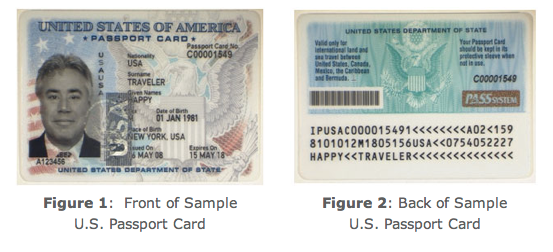
A valid passport is required if you are entering The Bahamas via air. However, if you’re traveling by land or sea (including cruise ship and ferry), you can get by without one.  You could show a passport card instead.

Traveling to the Bahamas by Air

Americans traveling abroad or internationally need a valid U.S. passport. A U.S. passport allows Americans to travel legally to any country. Thus, this includes travels to the Caribbean, Mexico, Canada, and the Bahamas.

U.S. citizens must present a valid US passport to enter and exit the Bahamas when traveling by air. Also, the Bahamian regulations stipulate that passengers traveling by air must present a round-trip ticket. Therefore, citizens without a round-trip ticket could be denied entry into the Bahamas.

Traveling to the Bahamas by Sea

U.S. citizens traveling to the Bahamas by sea must have a valid passport. Also, their port of entry and re-entry should be the same. Citizens will need a US passport or passport card or a (WHTI) compliant document. It is advisable for Americans to obtain their passport early in the event of an emergency.

US citizens must apply for their passports early so they can handle any unforeseen problems which may delay their trip. Hence, a passport issued in the US can be used in any country, anywhere in the world.

The Verification Process

Entry is verified or denied depending on customs. United States citizens traveling by cruise liners can board a cruise ship with a valid United States passport. All passports are checked, verified, and stamped by the customs department in the Bahamas.

Bahamas Vacation 101: Do You Need a Passport to Go to The Bahamas? has everything you need to know about whether or not you need a passport to travel to the Bahamas! In short, all travelers need some form of valid identification to enter the country, but U.S. citizens can use either a passport or a passport card. Ready to start planning your dream getaway? Visit our website for more tips and tricks on how to make the most of your trip.

Conclusion

All in all, visiting the Bahamas is a truly unique and unforgettable experience. Whether you want to relax on the beach or explore the various attractions, The Bahamas offer something for everyone. However, before you start planning your dream vacation it’s important to remember that a valid passport is required for entry. In 2023 you can expect travel regulations to remain the same but there may be changes in terms of what will be accepted as proof of citizenship due to Covid-19 restrictions.